01
Exterior Patrol Routes
Visible checks along selected perimeter, parking, entrance, and exterior routes.

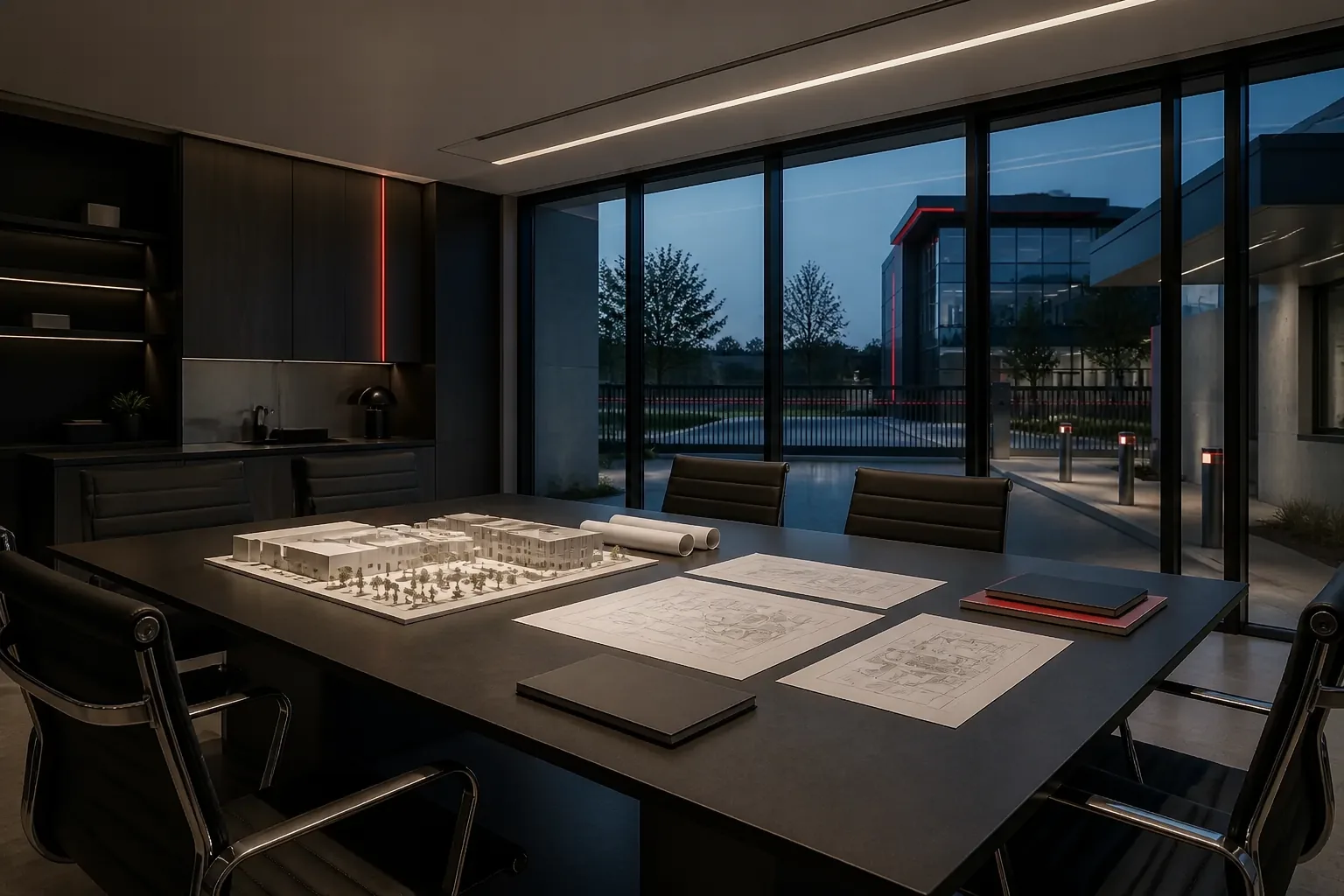
Mobile patrol guards check selected exterior areas and access points according to your property instructions. Patrol notes document observations so you know what guards found along the route.
Patrol coverage includes selected entrances, parking areas, loading areas, perimeter paths, and common spaces.
01
Visible checks along selected perimeter, parking, entrance, and exterior routes.
02
Patrol attention for vehicle areas, pedestrian paths, entrances, and closing periods.
03
Checks at access points used by employees, visitors, vendors, and vehicles.
04
Attention around docks, delivery activity, yards, and adjoining travel paths.
Every visit follows the same steps, so one night can be compared with the next.
01
Between scheduled visits, an alarm call can bring an officer to the property within 30 minutes.
02
Guards try doors, test gate latches and note lights that are out.
03
Anyone hanging around after hours is asked to move along, and the stop is noted in the report.
04
Each checkpoint entry carries the arrival time and photos of what the guard found.
A route pairs well with an entrance guard, and event guards or fire watch can be added when a date or a repair calls for it.
01
A guard at the front door while the route covers the back lot.
On-Site Security Guards02
Event-day coverage for guest entry and backstage doors.
Event Security03
A guard on timed rounds during a sprinkler or alarm outage.
Fire Watch ServicesEvery patrol follows a route you set, with checkpoints at the gates, parking areas, loading docks and exterior paths you want watched. Guards visit those checkpoints during the scheduled periods, following your access instructions at each stop along the way.
Observations are recorded by location, so when you read the patrol notes you know exactly where something was seen. Patrol works well alongside an on-site guard, and properties across the Bay Area, Monterey Bay and South Bay can request a route.
The right patrol schedule follows the hours your property is most exposed. Retail centers often center checks around closing time, when staff leave and lots empty. Offices and campuses focus on evenings and weekends once buildings are quiet. Distribution and agricultural sites time checks around delivery windows and the hours the yard sits unattended.
Start with the hours nobody is on site, then add the periods when activity changes, such as the last delivery or the final employee leaving. Those transitions are where a scheduled check gives the most useful information, and security consulting can help map them for a larger property.
In San Francisco, a patrol route often runs through a building’s garage ramp, loading entrance and side doors. On the Peninsula, campus routes connect parking areas with the paths between buildings. In Salinas and Watsonville, routes cover the gates, yards, equipment zones and fence lines of agricultural and distribution properties.
Residential communities use patrols for gates, shared spaces and parking, giving residents and visitors regular attention without a guard stationed at the entrance.
Patrol notes are most useful when they read like a map of the visit. Each entry names the checkpoint, the time of the check and what the guard observed there, with photos attached, so your contact can tell the difference between a gate found open and a vehicle parked in the loading area. When a concern needs attention, the guard follows your property’s notification order.
Patrol visits can do more than look around. A closing visit can lock gates and doors once the last employee leaves, and a morning visit can open them before the first delivery, with each lock-up noted in the report. The officers you trust with keys and gate codes are background-checked before they join a route.
Visit times can also shift within the window you choose, so anyone watching the property cannot count on a gap between checks. Every checkpoint entry carries the time and photos of the conditions there, which lets you follow the route the next morning.
Mobile patrol is priced per visit. In 2026 market data, a typical patrol visit with several checkpoints runs $30 to $70, and a single gate check or lock-up sits at the bottom of that range. Agricultural routes near Watsonville sit at the lower end, and San Francisco garages and loading areas at the higher end.
Visits per night times nights per month times the rate gives the total. A Gilroy distribution yard checked three times on each weeknight needs about 65 visits a month, roughly $2,280 at $35 a visit. A Burlingame office park wanting two evening rounds of its garages and gates on weekend nights only uses around 17 visits a month, about $850 at $50.
Visit prices climb toward $115 when a route has many checkpoints, covers a large perimeter or several buildings, includes opening or locking gates, or takes place late at night and on holidays. Travel between scattered properties adds time to each visit, and detailed patrol notes for every checkpoint add a few minutes more. A short route with a handful of checkpoints on a compact lot stays near the low end. Share your checkpoints, schedule and priority areas on the quote request, and Vantage prices the route visit by visit.
Resources
Services
A few useful answers
A route can include parking, gates, entrances, loading areas, exterior paths, and other checkpoints you choose.
Each stop in the patrol report shows when the guard arrived, with photos taken at that checkpoint.
When the concern is spread over lots, gates and fence lines, or bunched into hours when nobody is on site. If people arrive at one door all day, a post fits better.
List the gates, parking areas, loading docks, entrances and exterior paths you want watched, in the order that makes sense to travel. The route follows that list.
Yes. If an alarm goes off or something on the property needs a look before the next scheduled check, call us out, and an officer is on site within 30 minutes. That visit is logged with the time and photos, like every other stop on the route.
Yes. A patrol route works on its own, with notes going to the contacts you name, or alongside an on-site guard at the main entrance.